

Create SEO content with research, structure, and your brand built in
CopyJump studies your site, brand, audience, and real search demand before turning an idea into a draft your team can actually use.
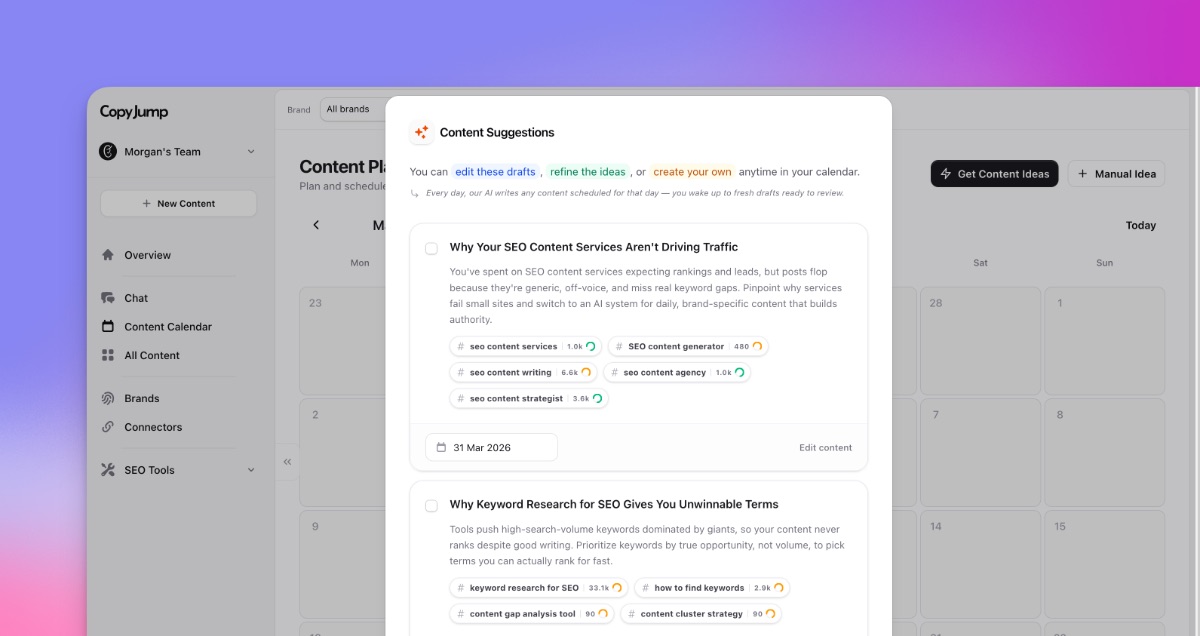
Keyword research, built in and done for you
Some teams pay for a separate keyword tool, then still have to learn how to use it. CopyJump does the research for you and turns it into topics worth publishing, picked for the business you added.
No separate keyword tool to pay for
Keyword research is built in. That is one less subscription, and one less tool to learn.
It picks the topics for you
CopyJump does the research and chooses keywords worth writing about, so you are not staring at a spreadsheet wondering which ones matter.
Chosen for your business, not a generic list
Suggestions are based on the brand and site you added, so the topics fit what you actually sell.
Hands-off, but yours to dig into
Take the suggestions as they are, or open the volume and intent data and decide for yourself. The control is optional, not required.
The CopyJump SEO workflow
Research first, structure second, drafts with context. CopyJump keeps the moving parts of SEO content in one path, so each article supports the brand, the site, and the reader journey.
Map the site and brand context
CopyJump starts from your sitemap, product pages, audience, offers, and brand profile.
Find real keyword opportunities
Use search demand and practical fit to choose topics your site can actually support.
Match intent before drafting
Every piece starts with the reader job, page type, and search intent instead of a loose prompt.
Build the brief and structure
Turn the opportunity into headings, angles, proof points, and internal link targets.
Draft with brand and SEO context
The draft uses your voice, audience, products, keywords, and content goal from the start.
Add links and improve over time
Connect new pages to the rest of your site, then refresh content when rankings or strategy change.
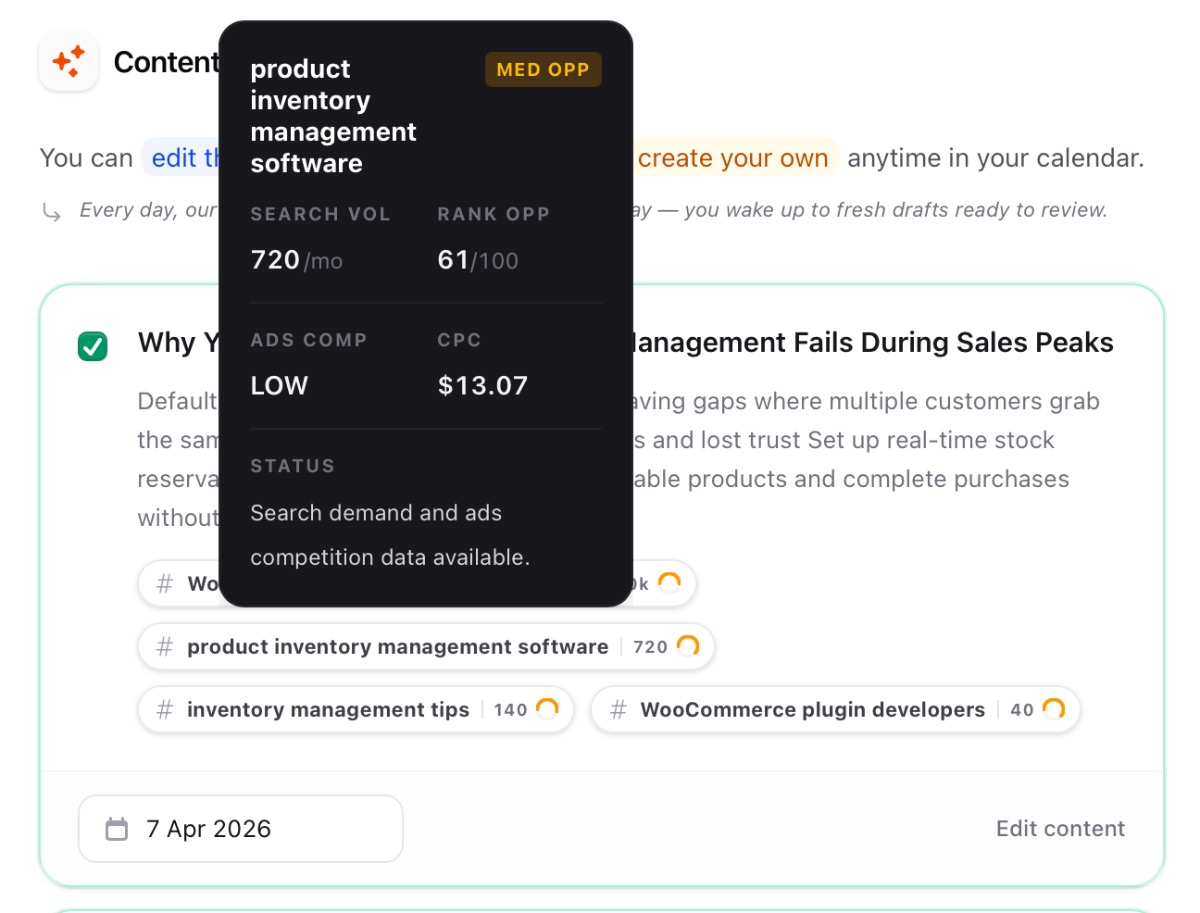
Inspect the keyword before committing
See keyword context where the content decision happens, not after the draft is already written.
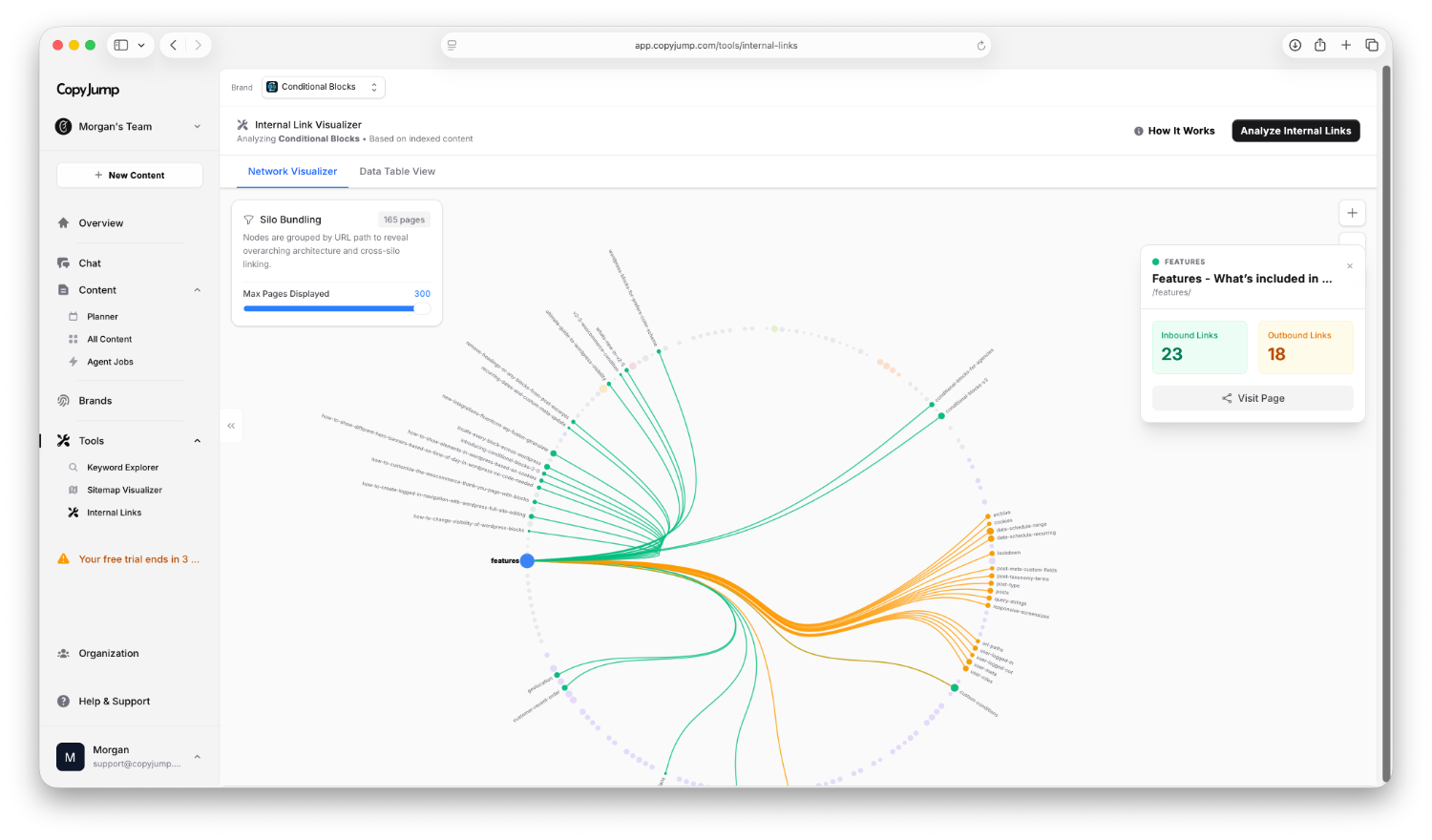
Add internal links before publishing
Connect new articles to the product pages, guides, and related content that matter.
Where SEO content breaks down
More AI drafts do not fix a broken content system. The teams that win search are not just producing more words. They are connecting research, site structure, brand expertise, links, and publishing cadence into one repeatable workflow.
The work is scattered. Keyword research sits in one tab, briefs in another, drafts in another, and internal links get added later if anyone remembers.
Generic AI looks fine but misses what matters. Drafts can read as structured while missing the site context, customer language, and product links that make SEO content actually useful.
More pages, not more system. Teams end up publishing more without building a stronger content engine underneath it.
Free SEO tools when you need a quick answer
Use these as side doors into the same SEO thinking: audit the site, inspect keywords, map structure, and plan clusters.
Learn the SEO system
Start with the free course, catch the latest update, then browse every guide in the hub.
SEO Course: How to Rank with AI Content
A 16-lesson course on keyword research, intent, AI workflows, editing, internal links, publishing, and measurement.
Google March 2026 Core Update and I/O 2026: What Really Changed
What changed in Google's March 2026 core update, how I/O 2026 reshaped AI search, who won and lost visibility, and what it means for SEO traffic.
API and MCP
Carry SEO content into the tools that publish it. CopyJump can plan and write the SEO content while your app, CMS, or AI agent handles the final publishing workflow.
Frequently Asked Questions
Is CopyJump an SEO tool or an AI writing tool?▼
It is an SEO content system. CopyJump uses AI for drafting, but the useful part is the workflow around the draft: brand context, keyword planning, briefs, structure, internal links, and review.
Do I need to be an SEO specialist to use it?▼
No. The page and workflow are designed for founders, marketers, and small teams that need sensible SEO content without becoming full-time SEO operators.
How is this different from asking ChatGPT to write an article?▼
A prompt usually starts from whatever context you paste in that moment. CopyJump keeps reusable brand, site, keyword, and workflow context attached to the content process so every draft starts with better inputs.
Does CopyJump guarantee rankings?▼
No. SEO depends on competition, site authority, technical health, search intent, and time. CopyJump helps with the parts small teams can control: better topics, better structure, better drafts, useful links, and consistent publishing.
Can I still edit and approve the content?▼
Yes. CopyJump is built to speed up research, planning, drafting, and QA. You still control what gets revised, approved, and published.
Should I publish new content or refresh old content?▼
Both matter. New content helps build topical coverage. Refreshes help improve pages that are close but not winning yet. CopyJump supports both workflows.
Build an SEO content system your team can keep using
Plan, draft, link, review, and refresh SEO content without stitching the process together across prompts, spreadsheets, and docs.