

Lesson 1: The New SEO Landscape
AI removed the content bottleneck. Google changed the rules. This course shows you how to win, using AI to move faster while creating content people actually want.

For years, the SEO playbook was simple: find keywords, write content, build links, repeat. The bottleneck was production. Most companies couldn't publish enough to compete.
Then AI removed the bottleneck.
Suddenly anyone could generate a 2,000-word blog post in three minutes. Companies that struggled to publish once a month started publishing daily. The web got flooded with content that looked like content (proper headings, decent grammar, reasonable length) but said nothing new.
Google noticed. And they changed the rules.
The bar moved from "can you produce content?" to "can you produce something worth reading?" This course covers how to clear it: AI for the speed, your expertise for the parts that decide whether a page ranks.
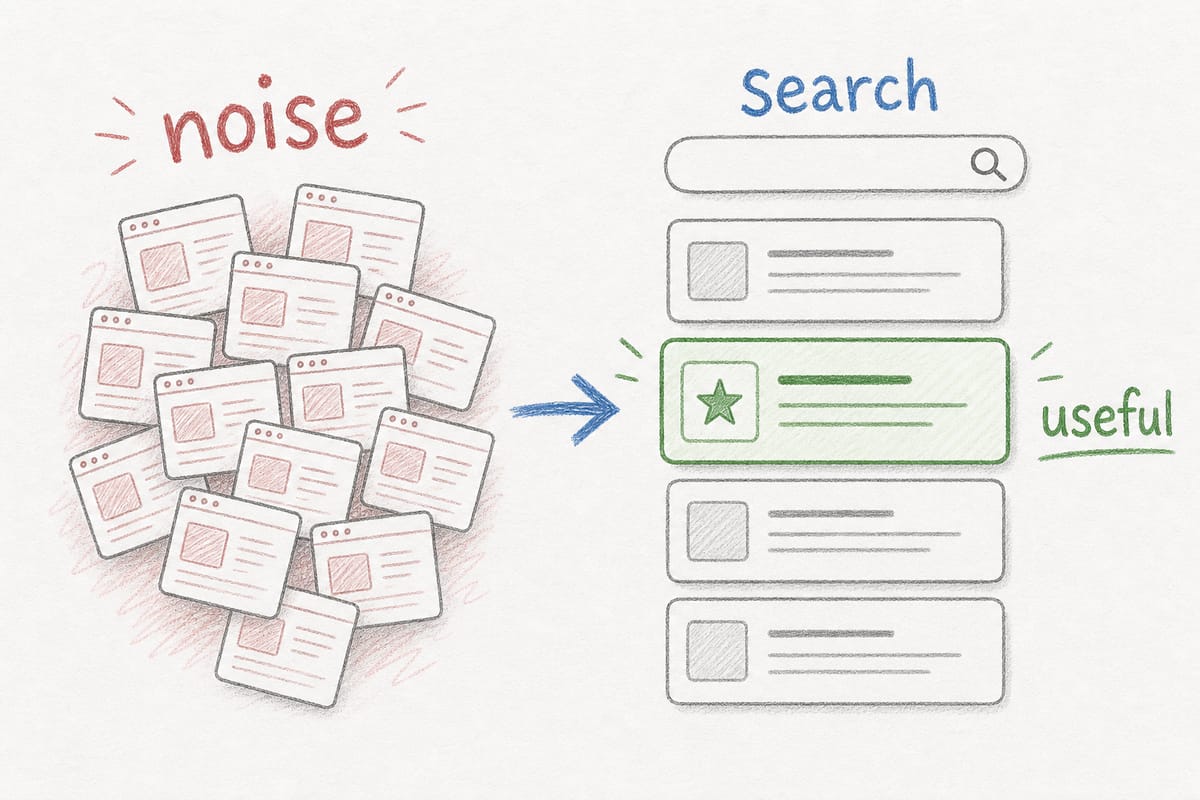
What Actually Changed
Volume stopped being a moat. When anyone can publish at scale, scale stops being an advantage. What wins now is publishing content that's clearly better than what already ranks, at whatever pace you can sustain.
Generic content became invisible. Google got dramatically better at spotting content that rephrases what's already ranking. If your post reads like a summary of the top 10 results, it won't outrank them. It needs a reason to exist.
Quality signals got more weight. Google's core updates keep pushing the same direction: reward demonstrated expertise, demote pages built for search engines. The next lesson breaks those signals down.
User behavior became a bigger factor. Content that doesn't satisfy searchers gets demoted. Google is watching what happens after the click.
AI Overviews changed the game. Google's AI Mode (launched fully in 2025) now provides AI-generated summaries for many queries. The June 2025 core update adjusted how organic results rank alongside these AI summaries. Content that's easily replaceable by a simple AI answer gets less visibility. To earn clicks, your content needs to offer something the AI summary can't: depth, perspective, or expertise that goes beyond basic facts.
What Stayed the Same
Keywords still matter. You write about what people search for, in the language they use. The research process hasn't changed. What you do with the research has.
On-page optimization still matters. Clear titles, logical structure, fast load times, mobile-friendly design. Table stakes rather than differentiators, but you don't get to skip them.
Internal linking matters more than it used to. When Google works out what your site is about and whether you're an authority on a topic, your internal link structure is a primary signal. Lesson 12: Internal Linking covers it in depth.
Intent matching decides more than anything else on this list. If someone searches for a comparison and you give them a tutorial, you lose. That was always true, and it's enforced harder now. Lesson 6 covers how to get it right.
The Real Shift
AI made good content harder to fake. The standard itself is unchanged.
Good content always meant content that helps the reader: real information, clear structure, honest perspective. Before AI, you could get away with mediocre content if you produced enough of it. Now you can't.
That's good news for a founder or a small team. You can't outproduce a big company, but you can out-think one. You have expertise they don't, opinions they're too corporate to publish, and direct experience with the problems your audience runs into.
AI helps you move faster. What makes the content rank is the insight you bring that AI couldn't generate on its own. We'll cover how to use AI effectively in Lesson 9 and how to edit AI output in Lesson 10: The 5-Pass Editing Framework.
What This Means for Your Strategy
If you're building an SEO strategy in 2026, the target is content that's demonstrably better than what already ranks for your keywords. Volume on its own no longer counts as progress.
The next lesson covers exactly what "better" means: the specific quality signals Google rewards and how to build content that hits them.
Next: Lesson 2: What Google Actually Rewards Now
Back to: Course Overview
Want this handled for you? The CopyJump SEO Agent applies these lessons automatically — research, briefs, internal links, and brand-aware drafts.
Meet the SEO Agent