

Google March 2026 Core Update and I/O 2026: What Really Changed
What changed in Google's March 2026 core update, how I/O 2026 reshaped AI search, who won and lost visibility, and what it means for SEO traffic.

Your rankings shifted in late March. Maybe they dropped. Maybe a competitor you've been watching for months suddenly jumped above you. You've read a dozen takes, AI content is dead, AI content is fine, this update was massive, this update was overblown, and none of them told you what actually happened to your site or what to do about it.
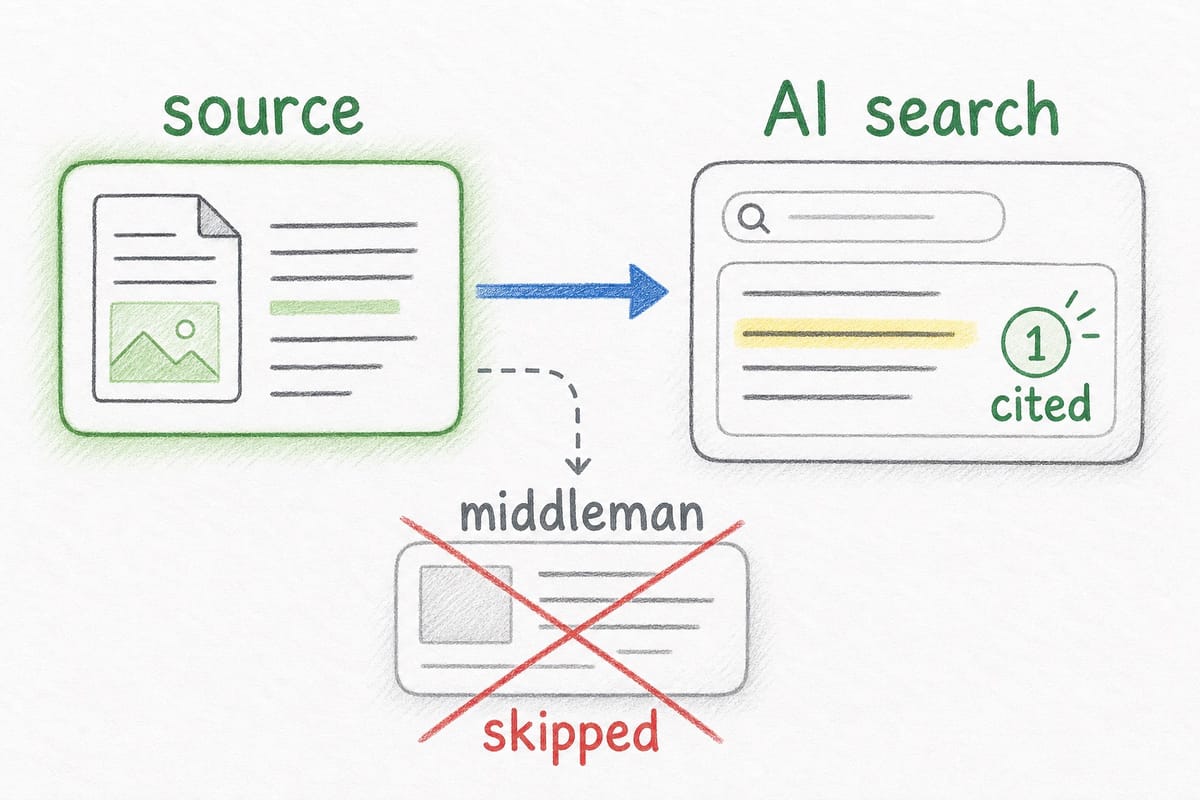
Here is what the data actually shows, grounded in verified sources. The March 2026 Google core update was not a normal volatility spike. It was the clearest confirmation yet of a structural shift that has been building across multiple updates: Google has systematically stopped rewarding the middleman.
The pattern is sharp once you look at the numbers.
What the March 2026 Update Actually Did
The March 2026 core update rolled out from March 27 to April 8, 2026, a twelve-day window confirmed by Google's own Search Status Dashboard. Google had flagged it would take up to two weeks. It ran the full course.
The volatility was not subtle. SE Ranking data reported by Search Engine Land shows that nearly 80% of URLs holding top-3 positions changed position during the rollout. That figure was up from 66.8% during the December 2025 core update. Roughly one in four pages that held a top-10 ranking before March 27 fell out of the top 100 entirely by April 8.
That is not normal fluctuation. That is a structural rebalancing.
One important piece of context: a separate March 2026 spam update completed on March 24-25, immediately before the core update began. The back-to-back timing amplified the perceived volatility in that window. Some ranking shifts that looked like core update effects were partly spam cleanup. If your site saw movement in that period, the cause matters for how you respond.
Google's core updates explainer describes these changes as broad improvements to ranking systems that do not target specific sites. The way to read that: sites that lost rankings were not necessarily penalized. Some were out-competed by content that better matched what Google's systems now signal as authoritative. The distinction matters because treating a ranking drop as punishment leads to the wrong fix.
Who Won and Who Lost, and Why the Pattern Matters
The Amsive analysis by Lily Ray, which tracked SISTRIX Visibility Index data across 2,076 domains, puts the directional shift plainly: Google moved visibility from intermediary sites toward stronger destination sources.
The winners were authoritative brands, official domain owners, and sites with original data that functions as a primary source. The losers were aggregators, UGC platforms, comparison sites, and content that exists primarily to capture search traffic rather than to provide authoritative coverage of a topic.
The specific loser list is instructive. YouTube lost more visibility points than any other individual domain, over 567 points by Amsive's measurement. Reddit, Instagram, X, TripAdvisor, Yelp, and Expedia all saw significant declines. The pattern held across travel, jobs, health, finance, and entertainment categories. Every segment where a third-party platform had been summarizing, curating, or repackaging content from original sources took a hit.
Two caveats worth noting before drawing the wrong conclusions: YouTube's decline was largely a return to pre-surge levels after an unusual visibility spike in early March 2026. Reddit saw a partial bounce-back in the weeks following the update. Neither was a permanent demotion. But the directional correction was real and significant even where some reversal occurred.
The cleanest framing of the pattern comes from Aleyda Solis's independent Sistrix analysis, cited in the Search Engine Land breakdown: visibility moved from "the platform people use to talk about the thing" to "the company that owns the thing."
The practical question is whether your content is the source AI search cites or the middleman AI search skips.
That single sentence is the most useful thing you can take from this update. It tells you exactly where Google's systems are pointing. The practical question for your own content is whether you are the company that owns the thing or the platform that talks about it.
How I/O 2026 Changes the Picture
The obvious fear when you see AI Mode expanding is that organic traffic is dying. If Google is putting AI-generated summaries at the top of search, why does any of this update analysis matter? You've already lost the click.
That framing misreads what Google is actually building.
The I/O 2026 search announcements reveal that AI Mode has reached 1 billion monthly users and is expanding to nearly 200 countries and 98 languages with no subscription required. Google also announced what it calls the "intelligent search box," described as the biggest upgrade to the Search box in over 25 years, with dynamic expansion for longer conversational queries, multimodal input, and AI-powered suggestions. The new information agents operate 24/7 in the background, monitoring across web sources and real-time data in finance, shopping, and sports, then proactively alerting users. TechCrunch's breakdown of how these agents work covers the practical mechanics: users create agents in AI Mode, set topics, and receive push notifications when the agent surfaces relevant findings.
Here is the connection that changes the strategic picture: AI Mode does not generate original expertise. It surfaces and synthesizes it. The information agents do not replace source-level content. They cite it.
Google's zero-click strategy depends entirely on having authoritative first-party source content to synthesize. When an agent monitors a topic and proactively alerts a user, it needs an authoritative source to pull from. If your content is not that source, it is not in the synthesis. If it is the source, it earns visibility in both traditional organic results and AI Mode outputs.
The March 2026 update is the negative enforcement mechanism: first-party source content ranks up, non-source content ranks down. I/O 2026 is the positive mechanism: first-party source content gets surfaced inside AI Mode and agentic search results. They are not in tension. They are the same mandate applied at two different layers of the search experience.
The practical question is not "will AI Mode kill my traffic?" It is "is my content the source AI Mode cites, or is it the kind of content AI Mode replaces?"
Why the Old Playbook Is Structurally Failing
The problem is not that you used AI to generate content. Google's Helpful Content Update targets low-quality content regardless of how it was created — the issue is content lacking originality, expertise, and value. Generic AI writing reproduces public information in a smoother package, but it cannot produce original expertise because it has no first-hand knowledge of your industry, your product, or your customers' actual problems.
That gap is now penalized structurally, not just competitively.
Content that functions as a summary, synthesizing what already exists and answering questions other sources have already answered, faces direct displacement from AI Mode at the surface level and ranking demotion at the index level. Google no longer needs an intermediary to summarize and repackage information when its own AI can do it. Content that functions as a primary source gets cited. Content that functions as a re-packager gets replaced.
Thin AI content is doubly penalized in this environment. It loses ranking positions under the March 2026 update's directional correction toward authoritative sources. It is also redundantly surfaced by AI Mode in ways that eliminate any residual click-through value. The patterns most commonly associated with generic AI writing, hedge words, buzzwords, formal transitions, gerund-heavy lists, vague qualifiers, passive voice overuse, are precisely the patterns that land content in the "repackaged, not authoritative" category the March 2026 update penalizes.
The strategic failure here is not a quality execution problem. It is a positioning problem. If your content strategy was built on volume of generic coverage rather than depth of authoritative contribution, the reward mechanism has changed underneath it. You are now competing with Google's own summarization engine, and summarization is not a competitive advantage.
The New SEO Playbook
The shift the March 2026 update and I/O 2026 demand is not a list of optimizations. It is a reorientation of what kind of content to produce and why.
Build like a source, not like a syndicator
Every piece of content should answer one question before it gets published: would Google or an AI agent cite this as the primary source of information on this topic? If the answer is no, because the content summarizes what other sources said, compares existing products using publicly available information, or covers a topic already well-documented elsewhere, the content is positioned as a middleman. The new reward mechanism is hostile to middlemen.
Use proprietary data and original research
Content that cites your own performance data, customer surveys, industry benchmarks derived from primary research, or first-hand operational insight cannot be reproduced by AI scraping public sources. This is what "first-party source" means in practice: content that exists because your brand has access to information nobody else has. The March 2026 update's directional shift toward authoritative sources rewards exactly this type of original contribution, and AI Mode needs it to function.
Build E-E-A-T into every piece, not as a checklist
Experience, Expertise, Authoritativeness, and Trustworthiness are not separate optimization tasks. They are the output of content that is genuinely useful, specific, and verifiable. The "Experience" component, added to Google's quality framework in late 2022, specifically signals first-hand knowledge, not researched knowledge. As CopyJump's breakdown of what Google actually rewards now explains, the December 2025 core update doubled down on brand authority and human-verified information. The March 2026 update shows it is now being enforced with ranking consequences.
Trustworthiness is built at the claim level. Claims must be verifiable before they become content, not just plausible enough to publish. This is where thin AI-generated content consistently fails: it produces statements that sound credible but cannot be traced to a verified source.
Prioritize site-level topical authority over individual piece volume
The March 2026 update's volatility data shows that consistent topical authority across multiple pieces matters more than individual ranking wins. A site that covers a topic thoroughly, with original research, deep guides, specific data, and expert bylines, earns the kind of brand authority that Google's systems signal as reliable. The sites that dropped were largely those that had relied on volume of generic content rather than depth of authoritative coverage.
The new SEO landscape makes the implication clear: content easily replaceable by a simple AI answer gets less visibility. To earn clicks, content needs depth, perspective, or expertise beyond basic facts. Building topical authority requires a strategic content map, not a publishing schedule.
How CopyJump Fits This Reality
CopyJump was built for the content reality the March 2026 update and I/O 2026 are now enforcing. The connection is direct, not aspirational.
The CopyJump system researches first, verifies claims, then drafts using real Google keyword data. Nothing in the output is guessed. Before writing anything, the system reads the brand's full site structure, builds content around actual gaps in the brand's coverage, and uses a brand profile configured once to reflect the brand's specific products, tone of voice, target audience, and core services automatically across every piece. The result is content grounded in the brand's actual reality, not generic industry information scraped and smoothed.
The claim verification stage is the specific mechanism that builds the Trustworthiness signal Google requires. Claims are verified before they become content. This is the structural difference between content that earns citation and content that gets surfaced by AI Mode and then bypassed.
The brand profile configuration is where the Experience signal gets built in. Content reflects the brand's actual products, actual customers, and actual expertise. It is not public information repackaged. It is original contribution from a specific source.
Internal link mapping built around the site's actual architecture, documented in the SEO for content teams workflow, ensures content connects to the brand's existing authority rather than existing in isolation. This supports site-level topical authority, the pattern the March 2026 update rewards, rather than individual piece optimization.
Google did not run another algorithm tweak. It structurally restructured search to eliminate the middleman, and the March 2026 core update plus the I/O 2026 search transformation are the clearest evidence yet. The practical move is not to optimize harder with the same content type. It is to build like a source.
Start a free CopyJump trial to audit your existing content against the first-party source standards the March 2026 update and I/O 2026 are enforcing, and begin producing content that earns citation from both Google and AI agents.
CopyJump is the SEO content your audience actually reads. Research-first. Claim-verified. Built around your brand.