How CopyJump's Content Agent Works: A Technical Deep-Dive
Most AI tools treat your brand like a prompt. Here's how we built a Content Agent that actually learns your voice and generates on-brand content daily.


CopyJump builds your brand, audience, and point of view into every draft so you spend your time adding insight, not fixing generic AI patterns.
Every draft uses your voice, audience, examples, and conversion goals so the writing starts closer to the way your team actually communicates.
AI drafts built around your brand voice and audience
Conversion copy and email sequences that match your tone
Free tools to detect and fix AI patterns in existing content
Writing guides covering craft, voice, and persuasion
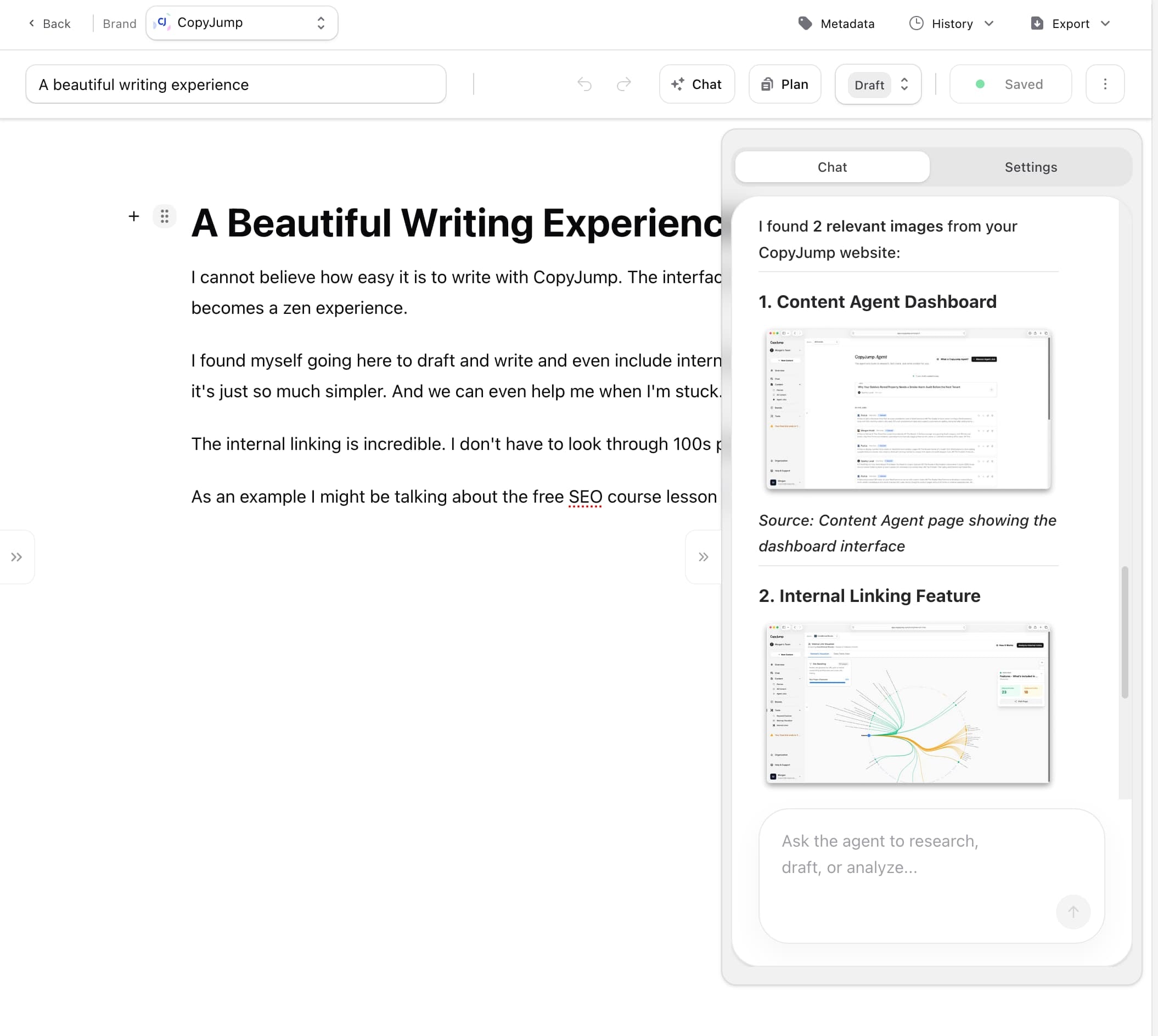
CopyJump does not have to replace your writing process. It can give you a grounded starting point, gather the right context, surface useful links, and help catch issues while you shape the final piece in the editor.
Drafts can start from your brand profile, website pages, examples, audience notes, and SEO context instead of a thin prompt.
Use AI for mundane work like finding useful internal links, tightening sections, checking structure, and helping with rewrites.
Run the content audit to check headings, links, and structure before you publish, then jump back into the editor to fix what matters.
Most AI tools treat your brand like a prompt. Here's how we built a Content Agent that actually learns your voice and generates on-brand content daily.
You can spot AI-generated content from a mile away. So can Google. So can your readers. Here's why generic AI content is flooding the internet—and how to create AI-assisted content that doesn''t suck.
AI content is everywhere. Some of it is good. Most of it is slop. Here's how to spot the difference—and why detection matters for content quality, not catching cheaters.
The trick to humanizing AI content is knowing what to change and what to keep. Fix the patterns that scream "AI wrote this" while preserving your actual message.
Stop writing random emails that get ignored. Here's the 6-email sequence framework that converts cold subscribers into paying customers - all buildable in 15 minutes.
Your writing likely sucks. Here’s how to fix it with 7 simple tips from the pros.
Build a brand profile that captures your voice, tone, words to avoid, and example content. The more specific your profile, the closer the first draft will be to your actual style. Generic AI sounds generic because it has no context about who you are.
AI slop is generic content that could have been written by anyone — hedge words, corporate filler, phrases like "in today's fast-paced landscape." You avoid it by giving the AI real context: your brand, your audience, your opinions.
With a well-configured brand profile, light polish rather than rewrites. You add your unique insights and examples. You should not be fixing robotic-sounding paragraphs — if you are, the brand profile needs work.
Copywriting is designed to drive action — buy now, sign up, click here. Content writing is designed to inform and build trust — blog posts, guides, educational material. Both matter and the skills overlap more than people think.
Focus on helping, not selling. Speak to specific pain points, be honest about what the product does and does not do, and let the CTA follow naturally from the value you have already provided. Pushy copy comes from overselling.
Generic AI content does. Google targets low-value content, not AI tools. AI-assisted content with genuine expertise, a real point of view, and brand voice performs well. The quality bar is the same regardless of how you write.
Set up your brand profile and see the difference context makes. First drafts that need polish, not rewrites.
Get 30 Articles for $20