

How to Humanize AI Content Without Losing Your Message
Humanizing AI content isn''t about fooling a detector. It''s about cutting the patterns that make writing forgettable, adding the real detail only you have, and planning the piece before you ever hit generate.

You can usually spot AI writing in a sentence or two. So can your readers.
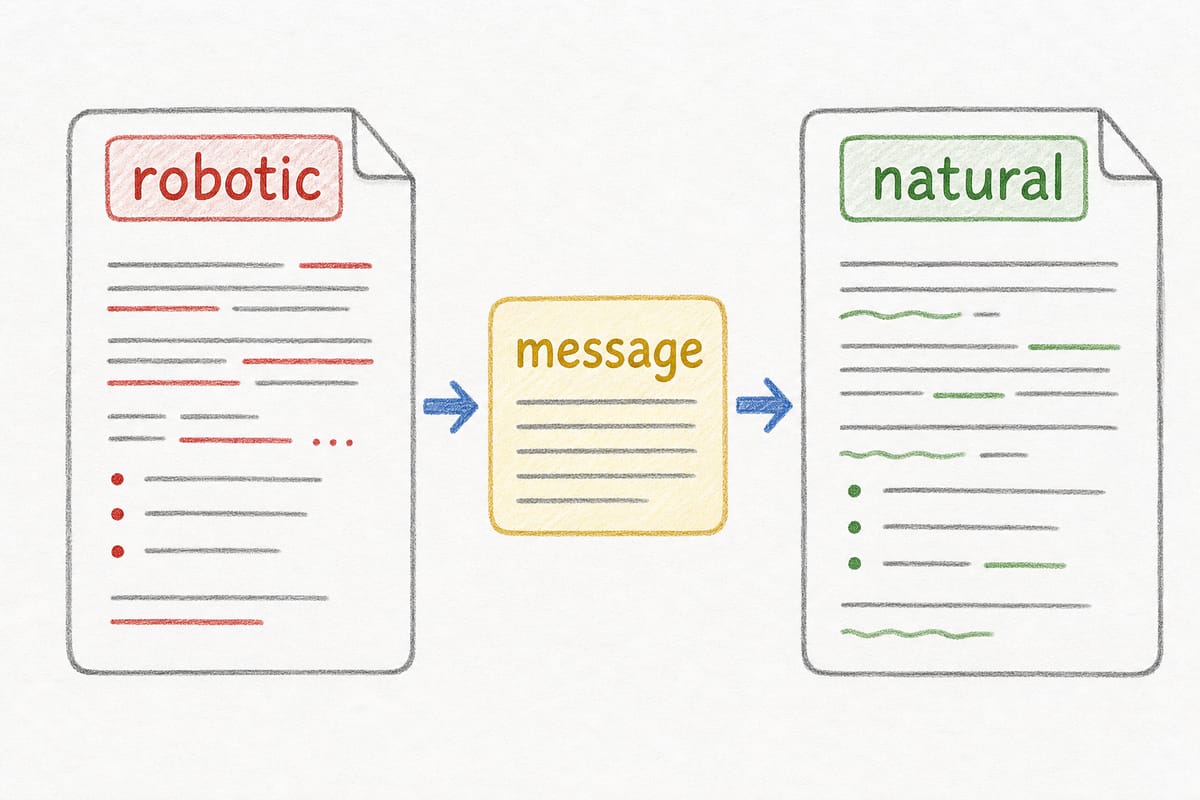
Humanizing means knowing which patterns make writing sound average, cutting those, and leaving everything else alone. You strip the tells (hedge words, stock transitions, default passive voice, sentences that all run the same length) while keeping your message, your facts, and your structure intact. Then you add the specific, real detail a model could never invent. A tool that sneaks text past a detector does none of that.
If you want to skip the work entirely, have the CopyJump agent write it for you. It's built to avoid the AI tells and write in your brand voice from the first draft, so there's nothing left to humanize. That's the quick fix.
If you'd rather do it by hand, or just understand why AI writing sounds the way it does, here's the whole method. By the time you're humanizing, it's often already too late, because the draft was generated in a tool that was never built to write in the first place. We'll get to that. Start with the draft in front of you.
First, know what you're actually fixing
A language model writes by predicting the most likely next word, again and again. The most likely word is the average one, the phrasing everyone reaches for. So unless you tell it otherwise, AI drifts toward the mean, and you get prose that's clean, correct, and completely forgettable, like the blurred average of everything ever written on the subject.
That's good news, because it makes humanizing mostly a subtraction problem. The ideas are usually fine and the structure often works. What gives the draft away is a thin layer of average-sounding habits sitting on top of decent thinking. Peel those off, add back what only you know, and the same words start to sound like you. It's also why so much AI content fails to land: it never gets past the average.
Cut these patterns, keep these
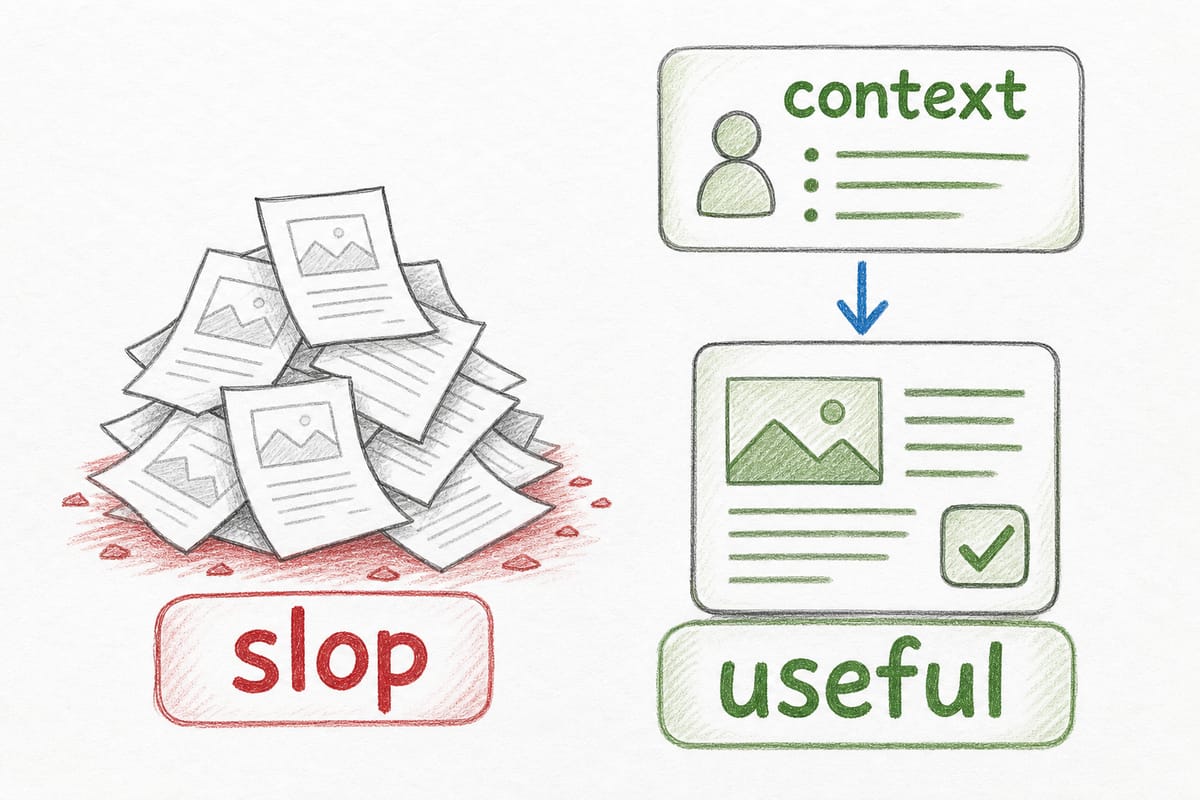
Most of the job is recognising which is which.
| Cut these (the tells) | Keep these |
|---|---|
| Hedge words: "may help," "can potentially" | Your core message and key points |
| Buzzword pairs: "critical yet overlooked" | Data, statistics, factual claims |
| Formal connectors: "Furthermore," "Moreover" | The logical flow and structure |
| Reflexive passive: "can be analyzed" | Technical terms that genuinely belong |
| Sentences that all share one shape | Anything that already sounds like you |
AI gives you decent ideas with average delivery. Fix the delivery without touching the ideas, then add your actual experience, which the model can't reach.
Humanize a draft in six moves
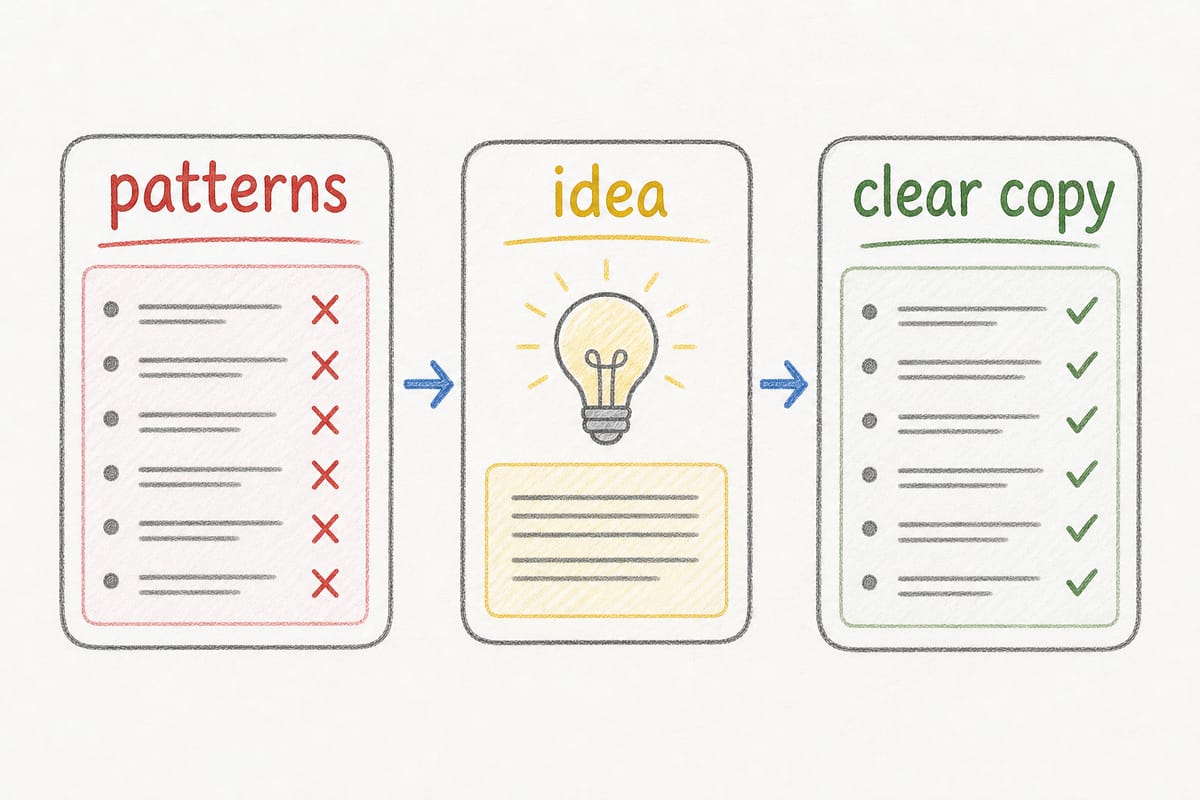
You don't need to rewrite every paragraph. Work through these in order and stop when it sounds like you.
1. Read it aloud, like a stranger. Forget detectors. Read the draft out loud as if someone else wrote it and you're deciding whether to keep going. The lines you stumble over, skim, or quietly resent are your edit list. Your ear finds "average" faster than any tool, and it catches the boredom detectors miss completely.
2. Cut the hedging. Hedged writing sounds unsure. Commit.
| Hedged (sounds like AI) | Direct (sounds like you) |
|---|---|
| "This may help reduce churn" | "This cuts churn" |
| "It can potentially improve rankings" | "It improves rankings" |
| "The data appears to suggest" | "The data shows" |
3. Swap the transitions. Trade the formal connectors for the way people actually talk.
| Formal connector | What to use instead |
|---|---|
| "Furthermore" | "Plus," or just start a new sentence |
| "Moreover" | "Even better," |
| "It's important to note that" | Delete it and state the point |
4. Flip passive to active. Active voice uses fewer words and lands harder.
| Passive | Active |
|---|---|
| "Your content can be analyzed in seconds" | "Analyze your content in seconds" |
| "Links should be added to the draft" | "Add links to the draft" |
5. Vary your rhythm. AI settles into a beat: three medium sentences, a transition, three more. Break it. Use a short line for emphasis. Then let a longer one stretch out and carry the nuance the short one skipped, the detail that earns its length. Then cut back to something short.
6. Add the specifics only you have. This is the move that does the real work, because vague claims sound like AI and concrete ones sound like a person who was there.
| Vague (the average) | Specific (yours) |
|---|---|
| "Many companies saw improvement" | "63% of the SaaS teams we surveyed saw improvement" |
| "It saves a significant amount of time" | "Editing dropped from two hours to thirty minutes" |
| "Results got better" | "Rankings moved from position 12 to 4" |
Numbers, named examples, and lived detail are exactly what a model can't produce for you, and exactly what makes a reader trust you.
Sidestep the three big mistakes
The first is overcorrecting into a personality. You don't need emojis, exclamation points, or forced jokes to sound human. That's not a voice, it's a costume. Keep your real tone and only remove the robotic patterns.
The second is rewriting sentences that were already fine. If a line is clear and natural, leave it. The goal isn't to change everything the AI wrote, only to fix what sounds off, so don't invent work for yourself.
The third mistake costs the most: watering down the point. In the rush to sound casual, people pile on qualifiers, soften real claims, and bury the lead under filler. Humanizing should make strong writing sound natural, not make it weaker. If an edit blurs the point, undo it.
The real reason humanizing falls apart
Most people generate their draft inside ChatGPT, Claude, or Gemini, and those tools were built to chat, not to write.
A chat model is optimised to give a helpful reply inside a back-and-forth conversation. It isn't holding a writing structure, an audience, an intent, a narrative arc, or your evidence, unless you hand all of that to it on every single message. So when you write in a chat box, you start from a format designed for replies, not articles. The draft arrives shaped for conversation, and humanizing turns into cleanup on something that was set up wrong from the first word.
You can fight it. Better prompts, clear instructions, and steering the conversation all help, and a skilled prompter gets real mileage out of a chat tool. But you're always working against the tool's default, patching structure and voice in after the fact. It's the same trap as a humanizer tool, one step earlier, because both treat the symptom of an upstream problem instead of the cause.
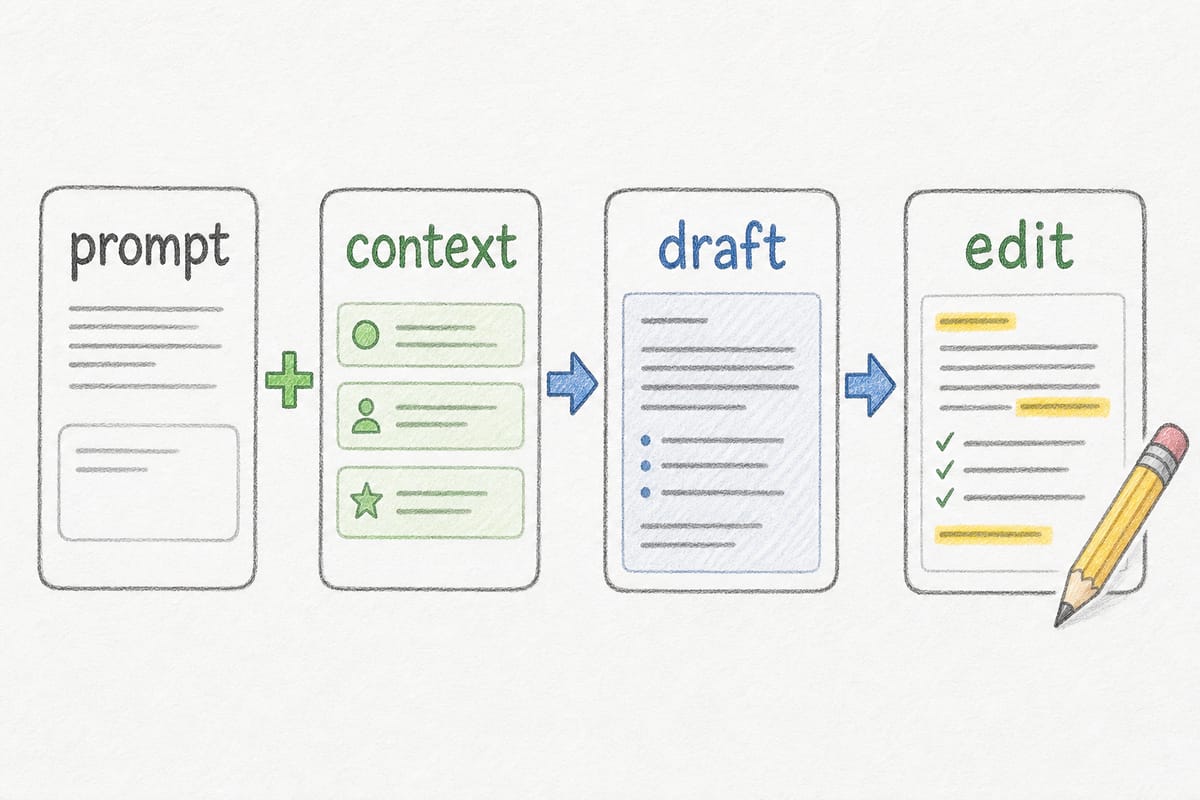
The fix is upstream. Decide the structure, the voice, the audience, and the evidence before you generate, not after. Plan the piece, then write it.
Plan the piece before you prompt
Pre-planning sounds like overhead. It's the opposite, because it removes most of the editing you'd do later. Before you generate a single word, answer five questions:
- One reader. Who is this for, specifically?
- One question. What are they actually trying to figure out?
- Your angle. What's the one-sentence point of view only you can offer?
- Your proof. Which real numbers, examples, or quotes will you drop in?
- The shape. What's the order of sections, starting with hook then answer?
Here's that same plan, filled in for the article you're reading right now:
| Field | This article's plan |
|---|---|
| Reader | A founder using ChatGPT to write posts that keep sounding generic |
| Question | How do I make AI content actually sound like me? |
| Angle | Humanizing is subtraction plus your real detail, and it starts before you generate |
| Proof | The mean-reversion explanation, the chat-vs-writing point, the before/after swap tables |
| Shape | Hook, what humanizing is, why AI sounds average, the six fixes, the deeper cause, the plan |
Spend ten minutes on that and the draft comes back closer to finished, in your voice, with your evidence already slotted in. The humanizing pass shrinks to a polish instead of a rescue. You can do this by hand in any tool, and you should, whatever you write with.
This is also exactly what we built CopyJump to systematise. It isn't a chatbot you paste prompts into. The plan above, the voice, the audience, the structure, and the patterns from this article are built into how the content agent writes, so the first draft already skips the hedge words, the stock transitions, and the passive defaults. Then it hands you an editorial flow to refine the draft and add the perspective only you have. The system carries the average so your time goes to the part that isn't average, which is the part that makes the work yours. If you want the editing discipline on its own, that's five-pass editing.
Match your effort to the stakes
Everyday content doesn't need much. Plan it, generate in your voice, do a light pass to drop in an example or two, and publish.
High-stakes content earns the full treatment. Start from the in-voice draft, rewrite the key passages in your own words while keeping the structure and research, add the proof and point of view only you have, then read the whole thing aloud one last time before it goes out.
Not everything needs the deep edit. The bar is simple. Would you be happy to put your name on it?
Win Google and AI with the same move
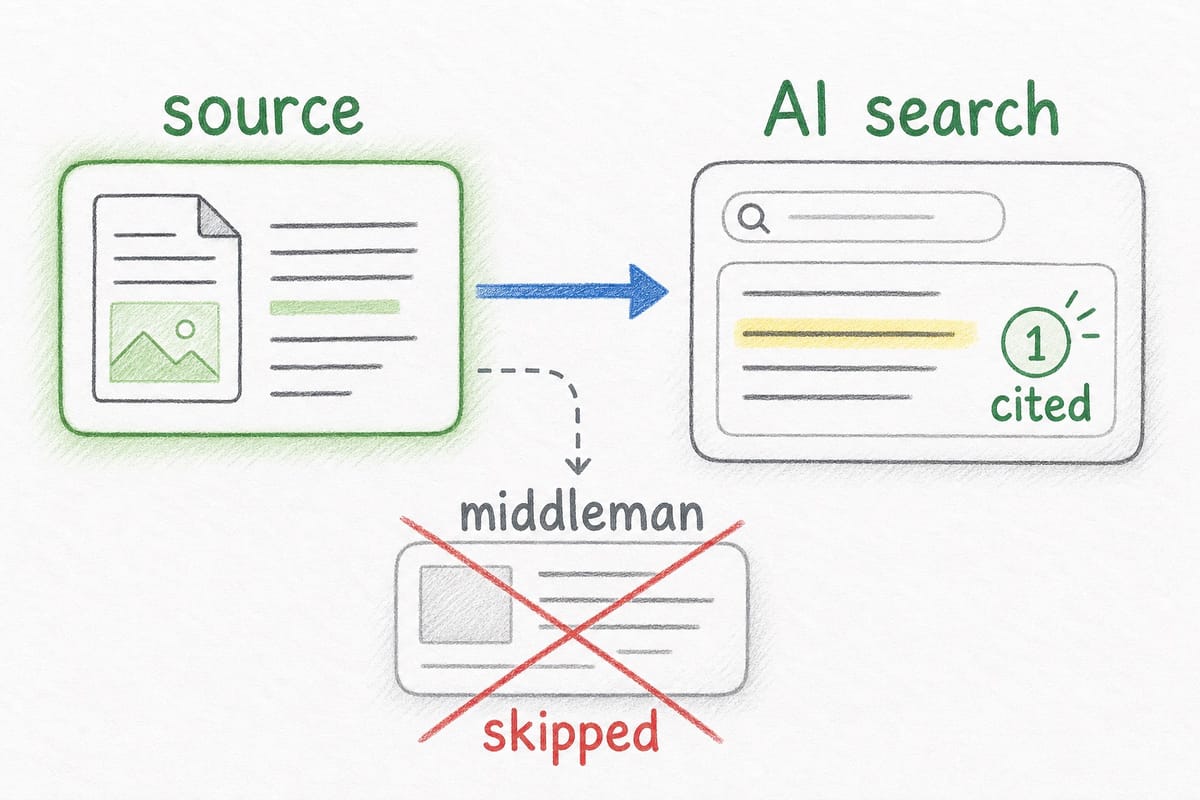
The same things that make writing sound human, the specificity, the real experience, the clear point of view, the claims you can back up, are exactly what Google's helpful-content systems reward, and exactly what AI answer engines pull from when they decide whom to cite. Detector-gamed text earns neither. Honest, useful, human writing earns both, which means sounding human and ranking well were always the same target.
Where to start
Cut the hedge words, fix the transitions, flip the passive voice, vary the rhythm, and add what only you know. Then stop starting in a chat box. Plan the piece first, write in your voice from the beginning, and your editing time goes into perspective instead of cleanup.
If you'd rather have the planning and the voice built in than bolted on, that's what CopyJump does from the first draft. See how the SEO Agent works, or start with CopyJump.