

Lesson 3: The Founder's SEO Mental Model
SEO as a system, not a campaign. How to think about search as a long-term channel without getting lost in tactics.

Most founders think about SEO wrong. They treat it like a campaign, something you do for a few months, measure the results, then move on. But SEO doesn't work that way. It's a compounding channel, more like building equity than running ads.
Getting the mental model right matters because it changes what you do. The right model leads to sustainable effort. The wrong model leads to giving up after three months because "SEO didn't work."
SEO Is a System, Not a Project
A project has a start date and an end date. SEO doesn't. You're not "doing SEO" and then finishing. You're building a content asset that generates traffic for years, if you maintain it.
Think of it this way: every piece of content you publish is a potential traffic source that works 24/7 without additional cost. But it only works if it's better than the alternatives. And since competitors are also publishing, "better" is a moving target.
The system has three parts: content creation, content maintenance, and measurement. You create new content to capture new keywords. You maintain existing content so it doesn't get stale. You measure to know what's working. Then you repeat.
This is why consistency beats intensity. Publishing five posts this week and nothing for the next two months is worse than publishing one post every two weeks indefinitely. Search engines reward sites that demonstrate sustained activity and commitment to a topic.
The Compounding Effect
Here's what most founders don't realize: SEO compounds.
Your first few posts probably won't rank for much. You're an unknown site with thin authority. But each post that does rank builds signals. Backlinks, user engagement, topical relevance. Those signals make your next post more likely to rank. Which builds more signals.
A site with 10 related posts on a topic has more authority than a site with 1 post, even if that 1 post is excellent. Google trusts depth. A cluster of interconnected content on a subject signals you're serious about that subject. Lesson 7 covers how to build these clusters strategically.
This is why picking a focus matters. Spreading your content across ten unrelated topics means you never build depth in any of them. Concentrating on one or two topics means you build authority faster, even with less total content.
Here's what this looks like for a local coffee roaster:
| Unfocused (broad, shallow) | Focused (nested, deep) |
|---|---|
| "Best coffee for beginners" | "How to brew pour-over coffee" |
| "Coffee vs tea health benefits" | "Best grind size for pour-over" |
| "How to open a coffee shop" | "Pour-over vs French press" |
| "Coffee trends 2026" | "Water temperature for pour-over" |
Both are about coffee. But the unfocused approach skips around. You're a mile wide and an inch deep. The focused approach builds a cluster around pour-over brewing. After four posts, Google sees you as the pour-over authority. That compounds. Lesson 7 shows you how to structure these clusters.
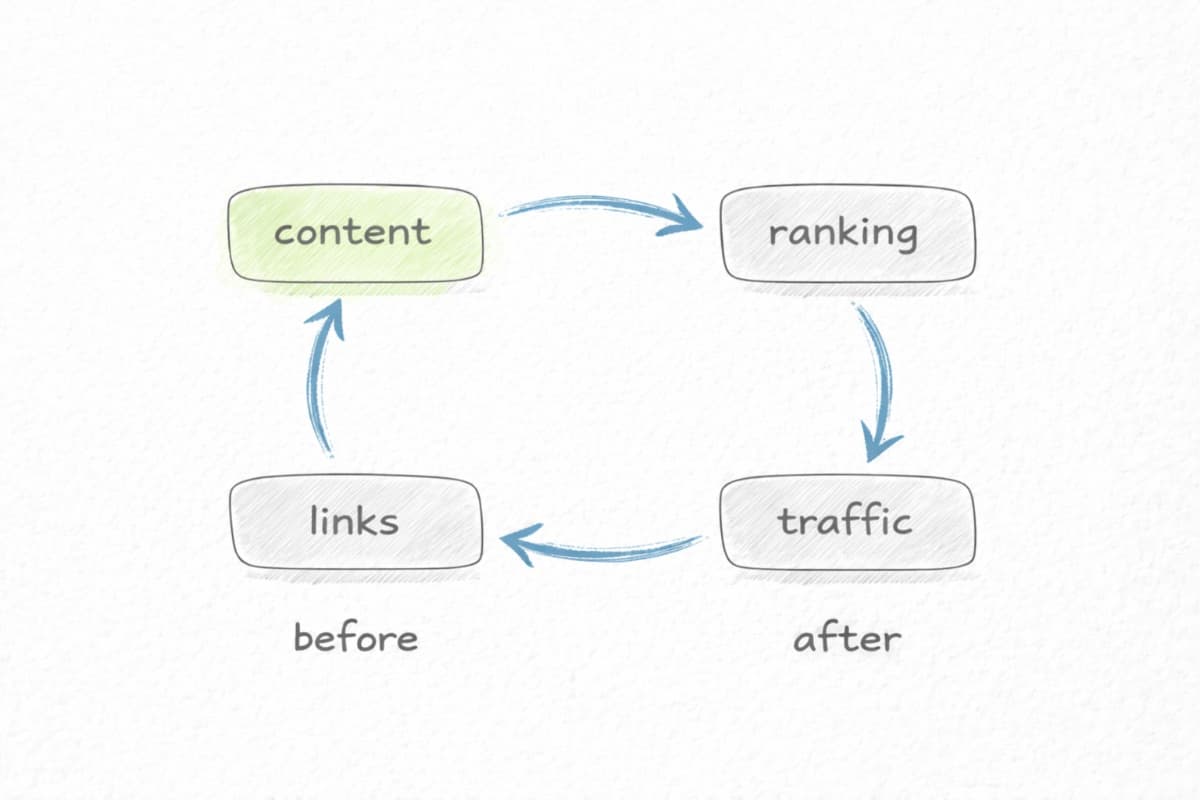
The compounding works against you if you stop. Content gets stale. Competitors publish better versions. Your posts drop in rankings. Then you've lost the compound momentum and have to rebuild.
How to Think About Time
SEO operates on a different timeline than most marketing channels.
Paid ads: you see results in days. Social: you see results in hours. SEO: you see meaningful results in months. Three to six months is a reasonable expectation for new content on a new site. Sometimes faster if you're targeting low-competition keywords. Sometimes longer for competitive terms.
This timeline freaks founders out. But compare it to the payoff: paid ads stop working when you stop paying. SEO keeps working. A post you publish today could drive traffic for five years with minimal maintenance.
The question isn't "why does SEO take so long?" It's "what else builds an asset that generates leads for years after the initial work?"
Knowing this timeline changes how you plan. You don't start SEO expecting results this quarter. You start SEO expecting results next year, compounding every year after that. If you need leads this month, run ads. If you're building for the long term, build SEO alongside your short-term channels.
The Mental Model in Practice
Here's the founder's SEO mental model in one sentence: consistent, focused effort creates compounding returns over time.
Consistent means showing up regularly. Not heroic bursts followed by silence. One post per week is better than ten posts in January and nothing until June.
Focused means picking your battles. One topic cluster you can dominate is better than five topics you'll always be mediocre at. Depth beats breadth.
Compounding means each piece builds on the last. Internal links connect your content. Each post reinforces your authority on the topic. Nothing exists in isolation.
Over time means patience. Not passive waiting, but active patience: continuing to execute while the results catch up.
What Founders Get Wrong
The most common mistake is quitting too early. You publish for three months, don't see significant traffic, conclude SEO doesn't work. But three months isn't enough time for content to gain traction, build links, and climb rankings. You quit right before the compounding starts.
The second mistake is publishing without focus. Random topics that don't connect, chasing whatever keyword looks interesting this week. You end up with a site that's about nothing in particular, which means Google can't figure out what you're authoritative about.
The third mistake is treating SEO as set-and-forget. Publish content, never look at it again. But rankings change. Competitors improve their content. Information gets outdated. The content that ranked well two years ago might need updating to keep ranking.
The System You'll Build in This Course
By the end of this course, you'll have:
A keyword research process that identifies opportunities you can actually win. A content strategy that focuses your effort instead of scattering it. A creation workflow that uses AI to speed up production without sacrificing quality. A measurement approach that tells you if you're making progress before traffic appears. And a maintenance routine that keeps your content competitive over time.
That's the system. It's not complicated, but it requires consistency. The next lesson explains why most AI content fails, and what makes the difference.
Next: Lesson 4: Why Most AI Content Doesn't Rank
Back to: Course Overview