

Lesson 6: Search Intent in the AI Era
Matching what searchers actually want. Why intent mismatch kills more content than weak keywords.

You can find the perfect keyword, write great content, and still fail completely. If your content doesn't match what the searcher actually wants, nothing else matters.
Intent mismatch is the silent killer of SEO content. It's also the easiest problem to avoid, if you take five minutes to check before you write. We touched on this in Lesson 4 as one of the main reasons AI content fails. Now let's go deeper.
What Search Intent Really Means
Search intent is what the searcher is trying to accomplish. Not what they typed, but what they want to happen next.
Someone searching "best project management software" wants to evaluate options and make a choice. Someone searching "how to use Asana" wants step-by-step instructions. Someone searching "Asana pricing" wants numbers. The keywords are all related to project management software, but the intent is completely different.
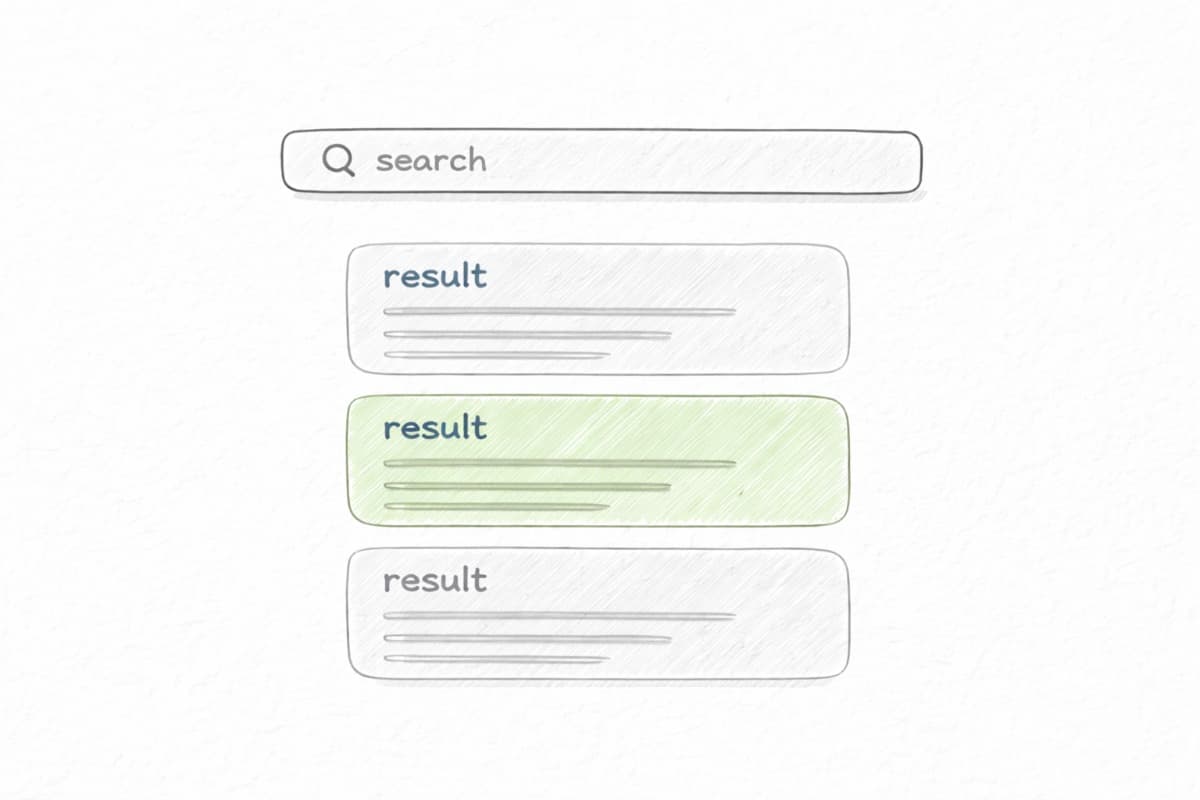
Google has gotten extremely good at identifying intent. It analyzes what kinds of content satisfy searchers for different queries and ranks accordingly. If every result for a keyword is a listicle comparison, Google has learned that's what searchers want. Write an essay instead and you won't rank, no matter how good the essay is.
The Four Intent Types
Most searches fall into four categories.
Informational intent: The searcher wants to learn something. "What is content marketing" or "how does SEO work." They want an explanation, a guide, a tutorial. They're not ready to buy anything.
Navigational intent: The searcher is trying to get somewhere specific. "Mailchimp login" or "CopyJump pricing page." They know what they want and are using Google as a shortcut.
Commercial intent: The searcher is researching before a decision. "Best email marketing tools" or "Mailchimp vs ConvertKit." They're evaluating options but haven't committed yet.
Transactional intent: The searcher is ready to act. "Buy Mailchimp subscription" or "ConvertKit free trial." They've decided and want to complete the action.
For most B2B content marketing, you're targeting informational and commercial intent. Transactional intent is usually handled by product pages, and navigational intent is about brand searches.
How to Identify Intent (The 5-Minute Check)
Before writing any content, do this:
Search your target keyword in Google. Look at the top five results. What type of content appears? Guides? Listicles? Product pages? Videos? That's what Google has determined satisfies this intent.
Look at the format. Are results long comprehensive guides or short answers? Are they step-by-step tutorials or conceptual overviews? Are they comparison tables or narrative reviews?
Look at the angle. Are results for beginners or experts? Do they assume prior knowledge or start from scratch? Are they opinionated or neutral?
Your content needs to match what you find. Not exactly (you still need to differentiate) but the type, format, and angle need to be consistent with what's already working.
Why Intent Match Matters More Now
In the past, you could sometimes brute-force your way through intent mismatches with enough authority and backlinks. A big site could rank something mediocre just on domain strength.
That's harder now. Google has gotten better at identifying when content doesn't satisfy searchers. User behavior signals (bounce rates, time on page, pogo-sticking back to results) directly influence rankings. If your content doesn't match intent, users bounce, and Google notices.
AI content often fails on intent because AI doesn't analyze the SERP (search engine results page). It produces content that's topically relevant but might be the wrong type entirely. You write an essay when people wanted a listicle. You write a comprehensive guide when people wanted a quick answer. The content is "good" but wrong. This is why the first pass in the 5-Pass Editing Framework is specifically about checking intent match.
Intent Variations Within Keywords
Some keywords have multiple valid intents, and that makes them tricky.
"Project management" could be someone wanting to learn what project management is, looking for software, or researching methodologies. Google handles this by showing mixed results, some informational, some commercial. But if you're writing content, you need to pick an intent and commit.
Look for keyword modifiers that clarify intent. "Project management for beginners" is clearly informational. "Best project management tools" is clearly commercial. "Project management certification" is a different informational angle. The more specific your keyword, the clearer the intent.
When intent is genuinely ambiguous, look at what's ranking most prominently. If four of the top five results are software comparisons and one is a methodology guide, Google has decided most searchers want comparisons. Target that intent unless you have a strong reason to go another way.
Matching Intent Without Copying
Intent matching doesn't mean copying what exists. It means understanding the job-to-be-done and doing it better.
If the intent is "compare options," you match that by creating a comparison, but yours has better criteria, more accurate information, or a clearer recommendation.
If the intent is "explain concept," you match that by creating an explanation, but yours uses better examples, clearer structure, or addresses questions the others miss.
The intent is the constraint. The execution is where you differentiate.
When to Ignore the SERP
Sometimes the current results are all bad. Thin content, outdated information, off-topic results. This is a genuine opportunity, but proceed carefully.
If results are bad, ask why. Is it because the keyword is too vague? Is it a new topic without much content yet? Is the difficulty so high that only big sites rank even with mediocre content?
If you think you can genuinely be the best answer and the current results are weak, go for it. But make sure you're really being the best answer, not just different. Different and wrong won't rank.
The Intent Checklist
Before you write, confirm:
| Check | Ask Yourself |
|---|---|
| Content type | What does this intent require? (Guide, comparison, tutorial, product page) |
| Format | What structure works? (Long-form, scannable, step-by-step, video) |
| Angle | What are searchers expecting? (Beginner, advanced, opinionated, neutral) |
| Completeness | What questions need answering for the searcher to be satisfied? |
If your planned content doesn't match these, adjust before you write. Fixing intent mismatch after publication is much harder than getting it right the first time. (If you do need to fix existing content that isn't ranking, Lesson 15 has a diagnostic checklist.)
Next: Lesson 7: Topic Clusters for Authority
Back to: Course Overview